November 12, 2026
What to Check in an Oval Diamond Before You Buy
By @foreversetting
An oval diamond offers a graceful silhouette that can make fingers appear longer, and its elongated shape often looks larger than a round brilliant of the same carat weight. But the oval cut also brings a unique visual challenge: a dark zone across the middle known as the bow tie effect. Understanding how to evaluate this feature before you purchase gives you confidence that your stone will sparkle from every angle.
Why the Bow Tie Effect Matters
The bow tie effect is a shadowy area that runs across the center of an oval diamond, roughly perpendicular to the long axis. It appears when light does not reflect evenly through the pavilion facets, leaving a strip that looks less brilliant than the rest of the stone. Some bow tie is nearly unavoidable in oval cuts because of their elongated shape and the way light travels through them. The key is knowing how much is acceptable and how much will distract from the diamond's beauty.
A well-cut oval diamond with minimal bow tie can appear bright and balanced. A stone with a pronounced bow tie, on the other hand, may look dull in the center even under good lighting. Many shoppers first notice this effect when they tilt the diamond or view it under direct light. Because the bow tie can change with the angle of observation, a static photo or a short video may not tell the full story.
What to Look for During Inspection
Before you commit to an oval diamond, examine it carefully with a checklist in mind. The points below help you separate a beautiful stone from one that will disappoint once it is set in a ring.
Check the Bow Tie Under Multiple Lighting Conditions
View the diamond under direct overhead light, diffused daylight, and the softer lighting of a typical jewelry store. In some conditions a bow tie can seem mild, but in others it may become quite dark. A diamond that looks attractive under all three types of light is more likely to perform well in daily wear, where you encounter many different environments. Bring a small flashlight or use the light on your phone to see how the bow tie reacts to a point source of light versus broad ambient illumination.
Rotate the Diamond and Watch the Bow Tie Shift
Hold the diamond with tweezers or ask the seller to rotate it slowly. Notice whether the dark area stays in one place or moves. In a well-proportioned oval, the bow tie should shift gradually as the stone turns, never remaining a solid black patch. If the bow tie appears fixed and very dark regardless of orientation, the cut likely has an issue with facet alignment that cannot be fixed after setting.
Evaluate Light Return, Brilliance, and Contrast
Light return refers to how much light bounces back to your eye from inside the diamond. Brilliance is the bright white flashes you see, while contrast describes the interplay of bright and dark areas that gives a diamond depth and liveliness. A stone with good light return and balanced contrast will have a bow tie that is subtle and does not overwhelm the overall pattern. If the dark zone is the first thing you notice, the diamond probably sacrifices too much brilliance in exchange for its shape.
Look at Facet Alignment on the Crown and Pavilion
The facets on the crown (the top part of the diamond) should mirror those on the pavilion (the bottom part) as closely as possible. When facets are misaligned, light leaks out through the bottom rather than reflecting back through the crown, creating a larger bow tie. You do not need a loupe to see this; a simple visual check under magnification can reveal whether the facet junctions look crisp and symmetrical. A diamond with poor facet alignment may also show dark areas near the edges, not just in the center.
Request a Video Inspection and Study the Movement
Many online sellers provide a video of the diamond under controlled lighting. A video inspection lets you see the stone from multiple angles without being in the store. Watch the video several times, focusing on the center of the diamond as it rotates. If the bow tie appears very dark or if the stone seems to "blink" from bright to dark, that is a warning sign. A good video should show the diamond looking lively and evenly bright through most of the rotation.
If you are shopping in person, ask to see the diamond in a setting that simulates a ring, as the prongs and metal can affect how light enters the stone. Some jewelers have a custom viewer that holds the diamond at a natural tilt, which helps you see how it will appear in a mounting.
How Proportions Influence the Bow Tie
The length-to-width ratio of an oval diamond plays a role in the bow tie effect. Stones with a ratio between 1.30 and 1.50 are common and often show a moderate bow tie. Very elongated ovals (ratios above 1.60) tend to have a more pronounced bow tie because the pavilion facets are stretched and cannot reflect light as evenly. Conversely, a nearly round oval (ratio below 1.25) may have very little visible bow tie but loses the distinct elongated look that many buyers want.
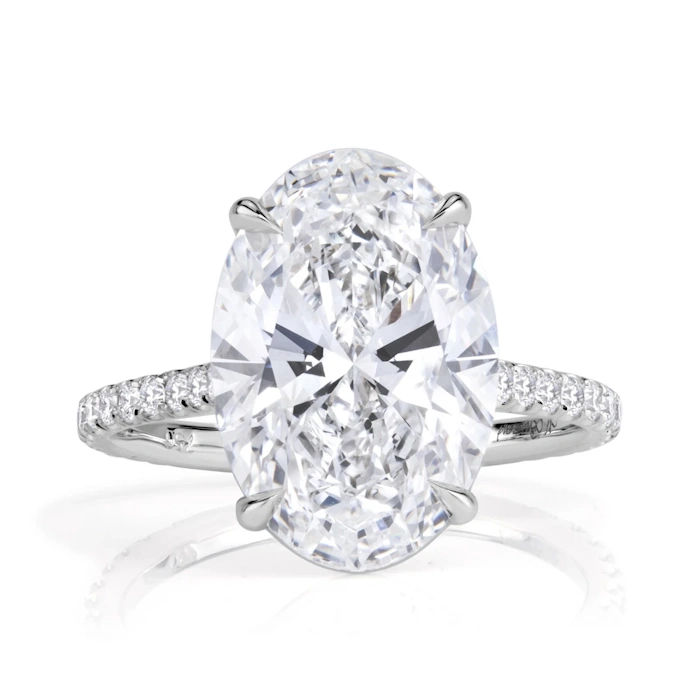
Depth percentage also matters. A diamond that is too deep can trap light, making the bow tie darker. A stone that is too shallow can let light escape, reducing brilliance. The ideal depth for an oval diamond typically falls between 58% and 63%, though the exact number depends on the individual cut. A reputable seller can provide the depth percentage and discuss how it affects the bow tie for that specific stone.
Setting and Bow Tie Interaction
The ring setting can either emphasize or minimize the bow tie effect. A halo setting, for example, adds extra brilliance around the oval and can draw the eye away from a mild bow tie. A simple solitaire setting puts all attention on the diamond itself, so any bow tie becomes more noticeable. If you are choosing a setting after buying the diamond, consider how the surrounding metal and side stones will interact with the diamond's light performance.
Some settings use prongs that cover part of the diamond's edges, which can slightly alter the perceived brightness of the stone. Discuss with your jeweler how the setting will affect the bow tie, especially if you are working with a diamond that shows a mild to moderate effect. A well-chosen setting can help the diamond look its best.
Practical Tips for a Confident Purchase
When you are ready to buy, ask the seller specific questions about the bow tie. A good jeweler will be honest about the stone's characteristics and may even point out the bow tie before you notice it. If a seller dismisses your concerns or says every oval has a bow tie and you should not worry, consider that a red flag. While some bow tie is normal, a seller who avoids the topic may be trying to move a diamond with a severe effect.
For detailed guidance on evaluating oval diamonds and comparing different stones, Diamond-rings-info offers a practical approach to understanding proportions, light performance, and setting choices. Their resources help shoppers like you make informed decisions without feeling rushed.
Take your time comparing multiple diamonds side by side, ideally under the same lighting conditions. What looks like a minor bow tie on one stone may seem much worse when placed next to a better-cut diamond. Your eyes will learn to spot the differences, and you will develop a sense of what level of bow tie you find acceptable.
Final Thoughts Before You Decide
An oval diamond with a subtle bow tie can be a stunning choice that offers a unique look compared to a round brilliant. The bow tie effect is not a flaw in itself; it is a characteristic of the cut that ranges from barely visible to distracting. By inspecting the diamond under multiple lighting conditions, checking facet alignment, and understanding how proportions and setting affect the bow tie, you can choose a stone that brings you joy every time you wear it.
Remember to trust your own eyes. If a diamond's bow tie bothers you in the store, it will likely bother you more over time. There are many oval diamonds available, and with careful inspection you can find one that balances shape, brilliance, and a minimal bow tie. A resource like Diamond-rings-info can support your research, helping you compare options and feel confident in your final choice.
❧